August 4, 2025
August 4, 2025
The Behavioral Finance Shift: How AI Is Changing What Investors Know About Themselves
Most investors know what they did wrong after the fact. AI is starting to show them why they did it in real time. This is the new frontier of behavioral finance.
Most investors know what they did wrong after the fact. AI is starting to show them why they did it in real time. This is the new frontier of behavioral finance.
For decades, behavioral finance has explained why investors make irrational decisions. Now AI is doing something more powerful — catching those decisions before they happen. This shift is changing how sophisticated investors understand themselves, their patterns, and their edge.
Behavioral finance has long documented the gap between how investors think they make decisions and how they actually do. Loss aversion, overconfidence, recency bias — these patterns are well-catalogued. What was missing was a way to surface them in real time, before they became costly trades.
The Mirror Problem: Knowing Your Biases Isn't Enough
Investors have known about cognitive biases for decades. The problem was never awareness — it was timing. Reading about loss aversion in a book doesn't stop you from panic-selling during a drawdown. The gap between knowledge and behavior remained wide because insight came after the fact, not during the moment of decision.
AI changes the timing equation. By analyzing trade history, position sizing, holding periods, and entry/exit patterns, AI systems can build a behavioral fingerprint for each investor — one that surfaces tendencies before they become losses.
What AI Actually Detects
The behavioral signals that matter most aren't dramatic. They're subtle: holding a winning position too long out of attachment, cutting a losing position too quickly out of fear, over-trading after a strong run, or going smaller than the model suggests during high-conviction setups.
AI trained on your own history can flag when you're diverging from your most profitable patterns. It's not predicting markets — it's predicting you.
The Quantara Approach
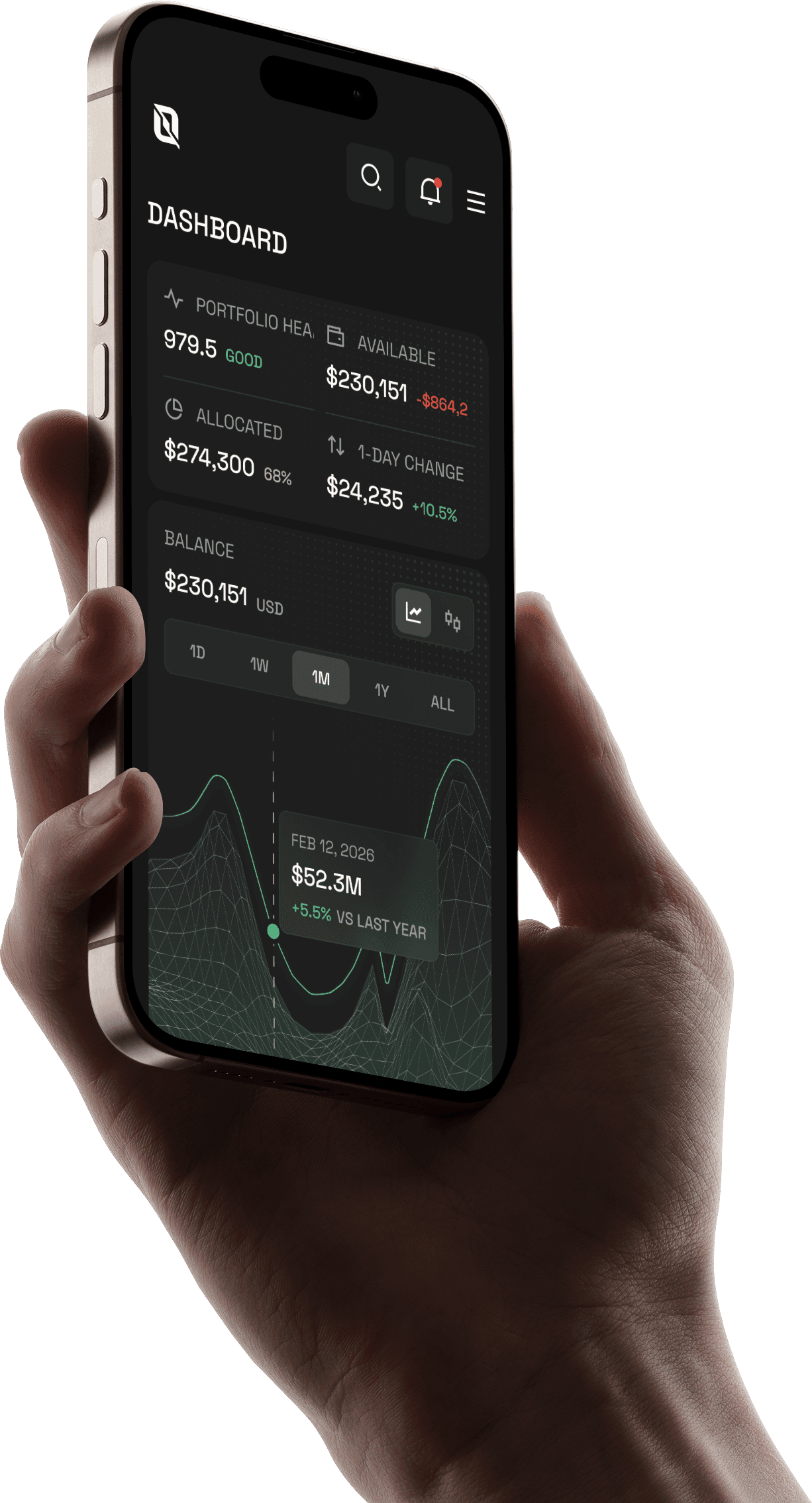
Quantara's platform tracks each user's decision-making patterns over time. Rather than offering generic signals, the system learns what “normal” looks like for each investor — and flags deviations that historically precede underperformance.
This isn't surveillance. It's a feedback loop. The best investors in the world work with coaches, keep trading journals, and review their decisions. AI automates that process at a level of detail no human could maintain manually.
Self-Awareness as Competitive Advantage
Investors who understand their own behavioral tendencies have a structural edge over those who don't. It's not about eliminating emotion — that's not possible. It's about building systems that flag when emotion is driving decisions that should be analytical.
The investors who will use AI most effectively won't just use it for signals. They'll use it to understand themselves — to build a level of self-knowledge that was previously impossible to maintain with consistency across hundreds of trades.
The Bigger Picture
Behavioral finance gave investors a vocabulary for what was going wrong. AI is giving them the tools to act on that vocabulary in real time. The shift from awareness to intervention is what separates the next generation of sophisticated investors.
The behavioral edge is real. For the first time, technology can help investors not just track performance, but understand the decision-making patterns behind it. That's not a minor upgrade — it's a fundamentally different way to improve.




For decades, behavioral finance has explained why investors make irrational decisions. Now AI is doing something more powerful — catching those decisions before they happen. This shift is changing how sophisticated investors understand themselves, their patterns, and their edge.
Behavioral finance has long documented the gap between how investors think they make decisions and how they actually do. Loss aversion, overconfidence, recency bias — these patterns are well-catalogued. What was missing was a way to surface them in real time, before they became costly trades.
The Mirror Problem: Knowing Your Biases Isn't Enough
Investors have known about cognitive biases for decades. The problem was never awareness — it was timing. Reading about loss aversion in a book doesn't stop you from panic-selling during a drawdown. The gap between knowledge and behavior remained wide because insight came after the fact, not during the moment of decision.
AI changes the timing equation. By analyzing trade history, position sizing, holding periods, and entry/exit patterns, AI systems can build a behavioral fingerprint for each investor — one that surfaces tendencies before they become losses.
What AI Actually Detects
The behavioral signals that matter most aren't dramatic. They're subtle: holding a winning position too long out of attachment, cutting a losing position too quickly out of fear, over-trading after a strong run, or going smaller than the model suggests during high-conviction setups.
AI trained on your own history can flag when you're diverging from your most profitable patterns. It's not predicting markets — it's predicting you.
The Quantara Approach
Quantara's platform tracks each user's decision-making patterns over time. Rather than offering generic signals, the system learns what “normal” looks like for each investor — and flags deviations that historically precede underperformance.
This isn't surveillance. It's a feedback loop. The best investors in the world work with coaches, keep trading journals, and review their decisions. AI automates that process at a level of detail no human could maintain manually.
Self-Awareness as Competitive Advantage
Investors who understand their own behavioral tendencies have a structural edge over those who don't. It's not about eliminating emotion — that's not possible. It's about building systems that flag when emotion is driving decisions that should be analytical.
The investors who will use AI most effectively won't just use it for signals. They'll use it to understand themselves — to build a level of self-knowledge that was previously impossible to maintain with consistency across hundreds of trades.
The Bigger Picture
Behavioral finance gave investors a vocabulary for what was going wrong. AI is giving them the tools to act on that vocabulary in real time. The shift from awareness to intervention is what separates the next generation of sophisticated investors.
The behavioral edge is real. For the first time, technology can help investors not just track performance, but understand the decision-making patterns behind it. That's not a minor upgrade — it's a fundamentally different way to improve.